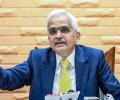
'Policy consistency combined with timely and calibrated reforms are expected to ensure that India not only maintains macroeconomic stability, but also emerges as a globally competitive and inclusive economy.'

Global investment firm KKR remains optimistic about India's long-term growth, citing rising incomes, premiumisation, financial deepening, and demand for quality services as key drivers for its consumption story, even as higher energy prices and AI disruption pose near-term challenges.

Prime Minister Narendra Modi spoke with Iranian President Masoud Pezeshkian, condemning attacks on critical infrastructure in West Asia and emphasising the importance of safeguarding freedom of navigation and ensuring secure shipping lanes.
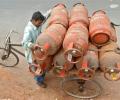
Researchers at CSIR-NCL have developed a technology for producing dimethyl ether (DME) as an alternative to liquefied petroleum gas (LPG), potentially reducing India's reliance on imports and enhancing energy security.

External Affairs Minister S Jaishankar has emphasised India's commitment to safe maritime transit and condemned attacks on merchant shipping amidst the ongoing West Asia conflict and global energy market disruptions.

India's economy registered a robust 7.7 per cent growth in the fiscal year 2025-26, an increase from 7.1 per cent in the previous year, with the January-March quarter alone seeing a 7.8 per cent expansion.

IndiGo on Monday said that around 30 aircraft are grounded due to "supply chain disruptions" and the country's largest airline is evaluating wet leasing of planes and other options to boost operations. At the end of September, the carrier -- also the world's seventh largest in terms of daily departures -- had 279 aircraft in its fleet. It operates more than 1,600 daily flights and currently flies to 100 destinations, including 26 international ones.

Donald Trump says several issues were settled during the final day of talks with Xi Jinping covering trade, tariffs, and diplomacy.

Commerce and Industry Minister Piyush Goyal announced that India expects to operationalise nine free trade agreements (FTAs) within the next 10 months, with plans for an additional three to four significant pacts over the coming year, reinforcing India's ambition to become a global manufacturing and investment hub.

India's leading passenger vehicle manufacturers are significantly increasing investments and factory capacities, alongside planning major product launches for FY27, driven by strong confidence in sustained domestic demand growth despite global geopolitical tensions and supply chain risks.

Most members of the Reserve Bank of India's Monetary Policy Committee (MPC) expressed concerns about inflation becoming generalised and highlighted uncertainties surrounding both inflation and growth prospects due to the West Asia conflict, according to the recently released minutes.
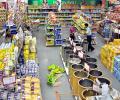
Jiomart B2B is the latest among organised supply-chain companies to bite the bullet, shutting down its warehouses, and asking its employees to leave. Why are companies finding it difficult to sustain the supply-chain business? Experts point out that gross margins in supplying fast-moving consumer goods (FMCGs) are very low.
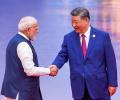
India's dual pursuit of a robust strategic partnership with Washington and a pragmatic, tension-management policy with Beijing represents the essence of modern multi-alignment. By embracing economic pragmatism, learning to compartmentalize political differences, and engaging in continuous dialogue, India can secure its borders, grow its economy, and contribute to a stable, multipolar Asian century, points out Ambassador Rajasekhar.

Companies are already diversifying sourcing, raising prices, and reworking operating models as the disruption drags on.

India's economy is projected to maintain growth above 7 per cent in 2026-27 (FY27), supported by strong domestic consumption and investment, even as global growth faces risks from geopolitical tensions, according to industry body Assocham.

Indian startup funding plummeted by 43 per cent year-on-year to $7.81 billion between March 1 and June 15, 2026, largely due to the West Asia conflict, which has amplified global risk perceptions, tightened liquidity, and led to rupee depreciation, making global investors cautious.
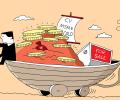
Several non-banking financial companies (NBFCs) are observing an increase in early-stage delinquencies within their micro, small and medium enterprises (MSME) loan portfolios, primarily driven by supply chain disruptions and escalating raw material costs exacerbated by the ongoing conflict in West Asia.

The Madhya Pradesh government has formed a committee to monitor gas and oil supplies amid concerns over the West Asia crisis, assuring citizens that there are adequate stocks and no need to panic. The government is also working to ensure the safe return of Indian citizens from Gulf countries.

India's mergers and acquisitions (M&A) market is projected to maintain an annual run-rate of approximately $200 billion, evenly split between domestic, inbound, and outbound transactions, despite global geopolitical turbulence, according to Rajesh Singhi, global co-head, M&A Advisory, Standard Chartered Bank.

India has expressed firm opposition to attacks on merchant shipping amidst the ongoing Iran conflict, revealing that several Indian nationals have died or are missing due to these incidents. The nation also called for restraint, de-escalation, and prioritising civilian safety in the region.
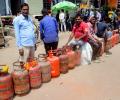
The Indian government has implemented several measures to mitigate external risks, support the balance of payments, and maintain macroeconomic stability amidst the ongoing West Asia crisis, according to Minister of State for Finance Pankaj Chaudhary.

National Security Advisor Ajit Doval called for decisive action against terrorism and said there cannot be 'double standards' in the fight against it, while addressing an international security forum in Russia.

Prime Minister Narendra Modi will chair a meeting with senior ministers to assess the petroleum, power, and fertiliser sectors in light of the ongoing situation in West Asia, focusing on ensuring uninterrupted supply and stable logistics.
Prime Minister Narendra Modi will chair a meeting with senior ministers to review the petroleum, power, and fertiliser sectors in light of the evolving situation in West Asia, focusing on ensuring uninterrupted supply and stable logistics.
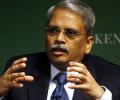
Infosys co-founder Kris Gopalakrishnan urges Indian startups to focus on deep technology and advanced manufacturing to ensure strategic autonomy.

Kumar Mangalam Birla urged young people to 'build in India, build for India and build for the world'.

There are roughly 2,000 ships stranded in the Persian Gulf, carrying more than 20,000 seafarers, according to the International Maritime Organisation, as quoted by The Wall Street Journal.

External Affairs Minister S Jaishankar has strongly defended India's decision to purchase Russian crude oil, stating that the country's energy choices are based on cost and availability, and highlighting the West's 'hypocrisy' in criticising India while historically supplying weapons used against it.
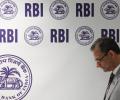
Uncertainties stemming from the West Asia crisis and its potential impact on inflation and economic growth were key factors in the Reserve Bank of India's Monetary Policy Committee (MPC) decision to maintain the status quo on interest rates, according to the recently released MPC meeting minutes.

India's crude oil imports from Russia reached a record high of approximately 2.73 million barrels per day (mbpd) in June, driven by discounts of $2-5 a barrel. This surge comes as the West Asia crisis disrupted supplies from traditional sources and China reduced its own purchases, leading Russia to offer more favourable terms to India.

A new study reveals that green hydrogen's potential as a sustainable fuel is contingent on the rapid decarbonisation of energy grids worldwide.

Hyundai Motor India Ltd (HMIL) announced plans to make Tamil Nadu its 'flagship EV hub for India', committing over 26,000 crore in investment, enhancing localisation, and creating approximately 2,000 additional jobs over the next five to six years. The company will roll out two new EV models from its Chennai facility this year, including its first mass-market dedicated EV.

'With inflationary pressures now at elevated levels and the adverse cost environment persisting, the company has to pass on a portion of the increased costs to the market, while continuing to ensure that the impact on customers is kept to the minimum extent possible.'

Prime Minister Narendra Modi's visit to Italy concluded with the elevation of India-Italy relations to a Special Strategic Partnership, focusing on enhanced cooperation across various sectors.

Andhra Pradesh has launched India's first quantum reference facility, aiming to build a sovereign hardware ecosystem and boost indigenous manufacturing of advanced computing systems.

This is one of the coldest temperatures achieved in a research facility in India with more than 80 per cent domestically sourced components.

Retail giant Walmart has announced that India has become one of its fastest-growing sourcing hubs globally, with the company having procured over $40 billion worth of goods from the country. This initiative aims to expand supplier capabilities, improve compliance standards, and help Indian manufacturers scale exports worldwide.

Nasscom President Rajesh Nambiar highlights India's growing importance as a technology partner due to geopolitical uncertainties and the need for resilient supply chains.
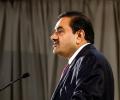
Gautam Adani, chairman of Adani group, emphasised that energy and intelligence are inseparable national priorities, asserting that India must build its own capabilities in these sectors rather than relying on external sources, especially in the context of global conflicts and shifting supply chains.

The Beijing summit may have reduced immediate diplomatic uncertainty, but it did not resolve the deeper structural contest between the United States and China. That contest appears likely to define the coming decade, notes Varun Arya.
